
. PAHALGAM: A motorable road from Pahalgam town runs through the mountains to a place known locally as CM’s Hut. From there, a roughly 6km trek leads to Baisaran valley, the site of last year’s massacre, when 26 tourists were killed and 17 wounded in a terrorist attack.At the junction near CM’s Hut, the journey stops. Anyone trying to go further along the muddy track is turned back. Police and CRPF personnel appear quickly, mildly reminding visitors the valley is out of bounds. Ponywallahs (local horse guides) do not go beyond this point. Instead, they pause, while tourists take photographs of the Pahalgam bowl from this vantage point and then head back towards Pahalgam town.There are no coils of concertina wire, no visible barricade. Police say they want to avoid alarming visitors. But the closure is felt in quieter ways.Down in the Pahalgam market, pony owners are trying to motivate visitors to at least go up to the junction viewpoint. Abdul Waheed Wani, 39, known locally as “Moulvi Sahab” leads the ponywallahs’ union. Standing on the banks of Lidder, the river that cuts Pahalgam into two, he says Basiran’s closure has changed the town’s rhythm. “People come here to see Baisaran and the four valleys around it. When they are closed, they spend a few hours in Pahalgam town and leave,” he says.Around 5,500 ponywallahs depend on tourism, he says. After last year’s attack, work stopped for almost seven months. “There was nothing to do. Tourists have now started returning, but it is not like before.”He says visitors still ask about whether they can go to Baisaran. “It feels awkward to tell them it is closed,” he says. A year on, he says, the change is visible. “It is not the same Pahalgam after April 22. Earlier, we could move freely and go anywhere. Now there are redlines and accountability. You are accountable if even your horse crosses a redline.”Outside the main taxi stand in Pahalgam, a signboard reads: “Difficult roads often lead to beautiful destinations.” The stand was full of taxis and drivers were standing in groups chatting, but only a handful of tourists were around.Inside the office, Ghulam Nabi Lone, who has headed it for decades, loves to talk about his life and Pahalgam. Wearing a pheran, the long Kashmiri cloak and sipping tea, he speaks about how he began his career four decades ago driving a military jeep, then an ambassador car. Now he owns three vehicles and has remained president of the taxi stand for nearly 40 years.But, he says, he has never seen a situation like this in Pahalgam. For seven months after the attack, everything came to a halt. “Sadakun par ghaas ug aayee thi (grass had grown on the roads),” he says, describing how there was no movement at all. “Everything was shut. Only Chandanwari was open for some time. Now that too is closed,” he says.Lone says he has raised the issue with officials, including in the recent meeting of senior Army, civil and police officers. “We told them these places, particularly Baisaran, need to open. Without them, tourists will not stay in Pahalgam,” he warns. “If Baisaran opens, tourists will come,” he repeated many times.Lone wants to talk about a security point. He says Baisaran had never been closed before. “I had a ticketing contract there. Many people told me to say that I should tell the media it would remain closed, but I refused. I told them it was never shut before the attack. I even said this in a security meeting,” he says, thus dispelling the rumours that Baisaran was opened by J&K’s elected govt some months before the attack.At Pahalgam police station, officers say there is no clear timeline for reopening of Baisaran. They say Chandanwari has been closed for road construction. Some roads lead nowhere.End of ArticleFollow Us On Social MediaVideosUS Nationals Detained At Srinagar Airport Over Banned Satellite DeviceNo Fuel Shortage: Govt Assures 100% Domestic Gas Supply As India’s LPG Demand Falls 13% In MarchPM Modi Takes ‘Jhalmuri’ Break, Interacts With Locals In West Bengal’s Jhargram Amid Poll CampaignIndia Warns Iran Of Consequences After Attack On Two Tankers In Strait Of HormuzIndia Expands Export Relief After Hormuz Tensions Adds Egypt & Jordan To Shield Trade RoutesCongress Holds Protest After PM Modi’s Address To The Nation On Women’s Reservation Bill SetbackIndia’s Naval Push In Indo-Pacific: IOS Sagar Departs Phuket After Successful Thailand Port CallManipur Streets Erupt As Security Forces Fire Tear Gas On Protesters | WatchManipur Horror: Retired Soldier Among Two Shot Dead In Ukhrul Highway AttackWhat We Know About Indian Ships Hit In Hormuz Strait By Iran Gunboats And Unknown Projectile123Photostories5 style lessons from Amitabh Bachchan’s iconic wardrobeWhy you forget names instantly: It’s not your memory, it’s your attention, and here’s how to fix it5 Horror movies based on real-life events: ‘The Conjuring’, ‘The Exorcist,’ and moreTop 5 sneaker releases of 2026 you shouldn’t missWhy it’s so hard to end long-term relationships as per science, therapist revealsBeautiful Indo-Arabic and Persian baby names quietly used in Indian familiesHe never drank alcohol, yet was diagnosed with severe fatty liver: What this says about modern diets and silent lifestyle risksHow to stop rice flour roti from cracking: 5 proven home tips to make soft and puffed rotiAs Deepika Padukone and Ranveer Singh announce second pregnancy, a look at Bollywood’s cutest pregnancy announcementsInside Cristiano Ronaldo and Georgina Rodríguez’s parenting style: How they’re raising grounded, disciplined teen sons123Hot PicksIran warDelimitation Bill DefeatPurple cap winnerOrange cap winnerIPL Points TablePublic holidays April 2026Bank Holidays AprilTop TrendingIPL Orange Cap 2026VijayPM Modi LiveWorld Largest EconomySue BirdIce SpicePahalgam Pony Wallah StoryWomen Quota BillE Coli Smuggling CaseErika Kirk Event

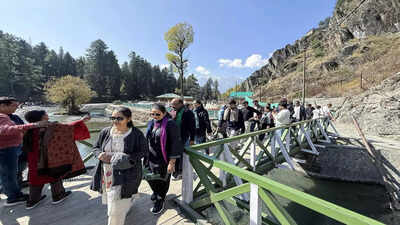
PAHALGAM: A motorable road from Pahalgam town runs through the mountains to a place known locally as CM’s Hut. From there, a roughly 6km trek leads to Baisaran valley, the site of last year’s massacre, when 26 tourists were killed and 17 wounded in a terrorist attack.At the junction near CM’s Hut, the journey stops. Anyone trying to go further along the muddy track is turned back. Police and CRPF personnel appear quickly, mildly reminding visitors the valley is out of bounds. Ponywallahs (local horse guides) do not go beyond this point. Instead, they pause, while tourists take photographs of the Pahalgam bowl from this vantage point and then head back towards Pahalgam town.There are no coils of concertina wire, no visible barricade. Police say they want to avoid alarming visitors. But the closure is felt in quieter ways.Down in the Pahalgam market, pony owners are trying to motivate visitors to at least go up to the junction viewpoint. Abdul Waheed Wani, 39, known locally as “Moulvi Sahab” leads the ponywallahs’ union. Standing on the banks of Lidder, the river that cuts Pahalgam into two, he says Basiran’s closure has changed the town’s rhythm. “People come here to see Baisaran and the four valleys around it. When they are closed, they spend a few hours in Pahalgam town and leave,” he says.Around 5,500 ponywallahs depend on tourism, he says. After last year’s attack, work stopped for almost seven months. “There was nothing to do. Tourists have now started returning, but it is not like before.”He says visitors still ask about whether they can go to Baisaran. “It feels awkward to tell them it is closed,” he says. A year on, he says, the change is visible. “It is not the same Pahalgam after April 22. Earlier, we could move freely and go anywhere. Now there are redlines and accountability. You are accountable if even your horse crosses a redline.”Outside the main taxi stand in Pahalgam, a signboard reads: “Difficult roads often lead to beautiful destinations.” The stand was full of taxis and drivers were standing in groups chatting, but only a handful of tourists were around.Inside the office, Ghulam Nabi Lone, who has headed it for decades, loves to talk about his life and Pahalgam. Wearing a pheran, the long Kashmiri cloak and sipping tea, he speaks about how he began his career four decades ago driving a military jeep, then an ambassador car. Now he owns three vehicles and has remained president of the taxi stand for nearly 40 years.But, he says, he has never seen a situation like this in Pahalgam. For seven months after the attack, everything came to a halt. “Sadakun par ghaas ug aayee thi (grass had grown on the roads),” he says, describing how there was no movement at all. “Everything was shut. Only Chandanwari was open for some time. Now that too is closed,” he says.Lone says he has raised the issue with officials, including in the recent meeting of senior Army, civil and police officers. “We told them these places, particularly Baisaran, need to open. Without them, tourists will not stay in Pahalgam,” he warns. “If Baisaran opens, tourists will come,” he repeated many times.Lone wants to talk about a security point. He says Baisaran had never been closed before. “I had a ticketing contract there. Many people told me to say that I should tell the media it would remain closed, but I refused. I told them it was never shut before the attack. I even said this in a security meeting,” he says, thus dispelling the rumours that Baisaran was opened by J&K’s elected govt some months before the attack.At Pahalgam police station, officers say there is no clear timeline for reopening of Baisaran. They say Chandanwari has been closed for road construction. Some roads lead nowhere.


