
Random Musing: Don Tzu and art of war (only winning, no losing) | World News

A few years ago, a video had gone viral of an Indian man thrashing a youngster and taunting him: “May may banayega tu (Will you make memes)?”. The answer to that existential question is Yes, because everyone is making memes now, from the White House, which has been serenading us with super-edits set to the Mortal Kombat leitmotif and cuts of popular Hollywood films, to the Iranians, who have somehow upped their meme game so much so that a lot of the world is cheering on the meme game from various Iranian social media handles, showing that the Americans are wont to lose at their own game. The meme was a concept first introduced by Richard Dawkins in The Selfish Gene (1976), to describe a unit of cultural transmissions analogous to genes, and has since become the internet’s lingua franca.
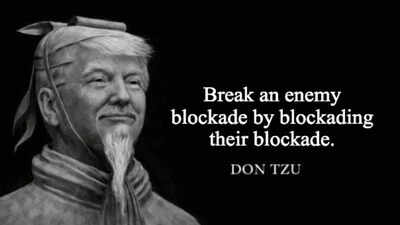
And the one meme that has taken the internet by storm, even breaking past the Great Firewall of China, is Don Tzu – a portmanteau of Donald Trump and Sun Tzu – full of Trumpian aphorisms on ‘winning’, which include gems like “break an enemy blockade by blockading their blockade” or “if you don’t know what you are doing, neither does your enemy” or “you can’t lose if you don’t have a goal”.But let’s start from the beginning. During his first presidential run, Donald Trump had told his audience that they were going to ‘win so much’ they were going to get ‘tired of winning’. And the world is close to getting tired. Today we bear witness to said winning, in a way that greatest strategic philosophers of yore: Chanakya, Machiavelli, and obviously Sun Tzu could never have conceived.Chanakya, the ruthless Indian adviser who engineered the rise of the Mauryan Empire; Machiavelli, who wrote the Renaissance playbook on how to rule; and Sun Tzu, who wrote the blueprint for discipline in The Art of War, were all great in their own way, but none of them would ever be able to hold a candle to Donald Trump, or, to use the sobriquet that has been cast on his shelf: Don Tzu.Jeffrey Epstein once wrote to Noam Chomsky that Trump had written three books, which made him one of the few people on the planet to have written more books than he had read. Because Don doesn’t need to read books, he has already internalised all their teachings. Sun Tzu wrote that all warfare is based on deception, but Don Tzu improves on that by removing the specifics of said deception. What critics call logorrhoea – his tendency to break into stream-of-consciousness thoughts – is clearly the highest form of deception. Sun Tzu said: “If you know the enemy and know yourself, you need not fear the result of a hundred battles.” Don Tzu doesn’t know thyself, so how can the enemy know him?Sun Tzu argued that supreme excellence consists in breaking the enemy’s resistance without fighting, and Don Tzu does that by behaving and speaking with such incoherence that the enemy has no idea what he’s doing. Even he doesn’t.Machiavelli, on the other hand, had argued it’s safer to ‘be feared than loved’, while Don Tzu believes it isn’t too much to ask for both, having reshaped first the Republican Party and then the new world order around those who fear and love him and those who don’t. Rules-based international order? There’s only one rule: Love Don with all your amour propre. Chanakya believed that power had to be accumulated patiently. There was an apocryphal story of how he saw a young mother scolding her son for eating from the centre of a plate where the food was hot and devised the technique of attacking the enemy at the borders where it’s weaker before building towards the centre. Don knows this well, which is why he builds big walls at borders and picks up opponents right from the capital.Chanakya believed that the enemy’s enemy is a friend, but Don Tzu believes friend or enemy is just a state of being, depending on who has a better deal at hand. It is, to borrow an old phrase, dangerous to be his enemy, but even more dangerous to be his friend.All of which shows why America is winning so much in Iran. Was the strike effective? Has the fog of war lifted? Did objectives get met? Who cares.
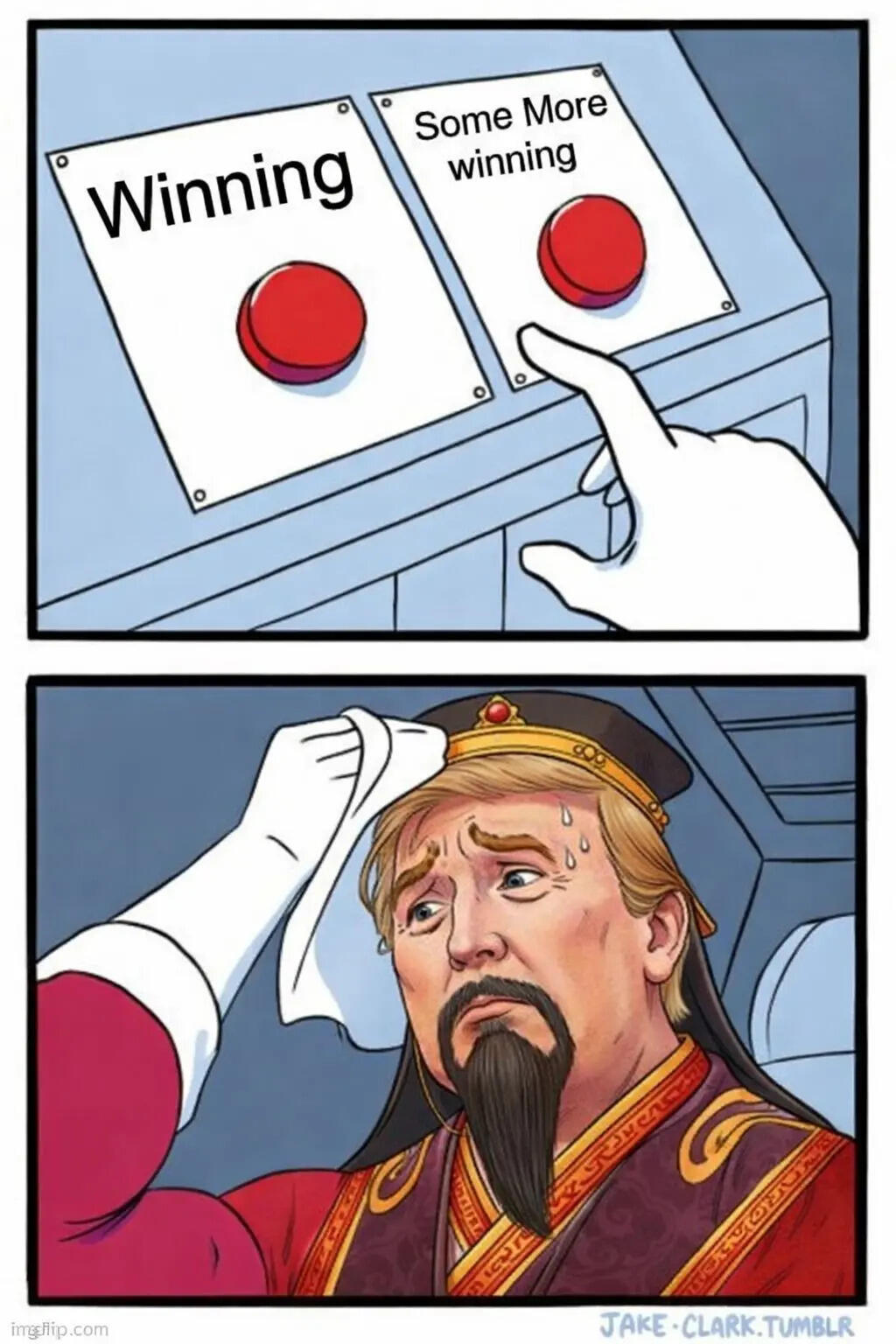
In the Don Tzu framework, such behaviour is for lesser mortals. He, on the other hand, declares victory, then declares a ceasefire, then declares he has won. Sun Tzu, Machiavelli, and Chanakya wanted to shape the battlefield, but Don Tzu understands that reality is a herd instinct caused by a lack of attention, so everything he does is total and complete victory.Sun Tzu assumed that knowledge precedes victory. Machiavelli assumed that control sustains it. Chanakya assumed that systems secure it.Don Tzu assumes none of this; he perhaps doesn’t even understand all of it, because it doesn’t matter. Because he understands the real nature of perceived reality and all creation better than any of the ancient strategists, which is that nothing matters, nothing is real.In The Matrix, when Neo goes to meet the Oracle the first term, he meets another young man, a potential who explains to him the real nature of the universe. After showing Neo, that he can bend a spoon, he tells him to realise the truth: It’s not the spoon that bends, but yourself. Don Tzu has realised that real nature but still wants someone to turn up with spoons: preferably lots of golden ones.
Edmund Hillary once said that one cannot conquer a mountain; at best one can hope to conquer oneself. Don Tzu has gone a step beyond that and realised that one cannot even conquer oneself, so why bother? As for winning, if you truly believe in your head that you are winning, and every neuron firing tells you are winning, is there any way to lose at all? But the world might be getting a little tired of winning, but that’s the world’s problem, not Don Tzu’s.


