
From sceptic to negotiator: JD Vance leads US-Iran talks- why Trump chose him

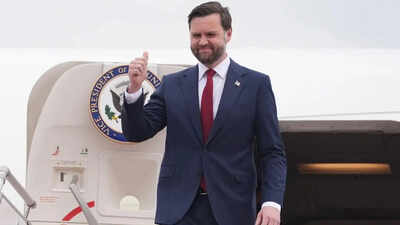
US vice president JD Vance, who had kept a distance from the Iran conflict in its early days, has now been picked by president Donald Trump to lead high-stakes negotiations with Tehran.Vance arrived in Islamabad on Saturday to lead the high-stakes talks with Iran. The vice president was on a two-day visit to Budapest when president Trump gave him one of the most critical assignments of his career.
Given that he had largely kept his distance from the conflict in its early stages, JD Vance could be an unlikely choice to lead the negotiations.
Why Trump picked Vance
Reports suggest Vance was chosen to lead the talks in part to meet a preference from Tehran. According to Reuters, some sections within Iran’s leadership saw him as an acceptable face for negotiations and had quietly indicated they wanted him involved, given his image as one of the more anti-war figures in the US administration.Vance however, dismissed the report and said he pushed to be part of the talks. “I wanted to be involved because I thought I could make a difference,” he told reporters before leaving Hungary.Despite Vance’s beliefs, the vice president said he supports the mission. “My key role was I sat on the phone a lot,” Vance quipped recently to reporters about helping to hammer out a cease-fire. “I answered a lot of phone calls.”
A risky job
The assignment comes with political and diplomatic risks. People familiar with his thinking told The Wall Street Journal that Vance is aware the outcome could have political consequences for him, but remained focused on ending the conflict. His office, however, said he is “not thinking about this in the realm of future political considerations”.There are also differences between the two sides. Iran has pushed for its right to enrich nuclear material, which the US has treated as a red line.The situation is further complicated by global stakes. The Strait of Hormuz remains a key concern, and any disruption has a wider economic impact.If the talks move forward, they could strengthen Vance’s standing within the administration and the wider Republican space. However, the risks remain high, and he could face criticism if the negotiations fail or the conflict continues.


