
NASA’s new PACE satellite can now pinpoint exactly where air pollution comes from

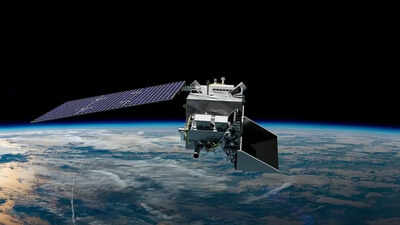
NASA’s latest Earth-observing instruments are redefining society’s ability to hold those responsible for pollution accountable. The Plankton, Aerosol, Cloud, Ocean Ecosystem (PACE) satellite was launched on February 8, 2024, with a primary goal of assessing the health of Earth’s oceans. However, PACE now serves an additional purpose as a guide for air quality management. Using its Ocean Colour Instrument (OCI), PACE has achieved a level of precision that enables the detection of nitrogen dioxide emissions from specific highways and industrial locations, such as power plants and transportation or shipping facilities.This breakthrough in the identification of ‘pollution fingerprints’ enables a shift from estimating pollution levels over large areas to accurately identifying the sources of pollution. By mapping and understanding where air pollution originates from, NASA provides health agencies and researchers with highly detailed data, which allows them to take the necessary steps to protect communities from the negative effects of local sources of pollution.
NASA satellite pinpoints exact sources of air pollution
The Ocean Colour Instrument (OCI) of the PACE satellite tracks pollution on a ‘neighbourhood scale.’ Various types of satellites map atmospheric haze as a homogenised data set, often blurring distinct sources, while OCI is capable of detecting a continuous spectrum of wavelengths or electromagnetic radiation – from ultraviolet through shortwave infrared (340 nanometers through 2260 nanometers). This hyperspectral capability allows it to provide vertical column density of nitrogen dioxide, a pollutant gas released from burning fossil fuels, at nadir (the point directly below the satellite), with a spatial resolution of approximately 1 kilometre. NASA’s researchers have illustrated how these maps can distinguish unique plumes of gases originating from different industrial sites, and that this type of spatial separation was previously unachievable using space-based data sensors.
Why nitrogen dioxide is the key to pinpointing pollution sources
Nitrogen dioxide is a very reactive form of pollution created from human activity, primarily due to combustion emissions from burning fossil fuels (such as natural gas and diesel) for energy and transportation purposes. Data collected by NASA’s PACE mission sheds light on how nitrogen dioxide remains concentrated near its emission source (e.g. a specific coal-burning power plant, or an interstate with heavy traffic) until it interacts with sunlight, whereupon it reacts to produce ground-level ozone (a primary component of smog). Daily tracking of these ‘emission signatures’ by NASA provides an unprecedented level of granular transparency in the monitoring of our environment; because of nitrogen dioxide’s relatively short atmospheric lifetime (often just a few hours), it is critical to be able to trace back the source of this type of pollution to determine where the greatest and most immediate health risks to nearby residents are likely to be located.
A dual-satellite shield is tracking pollution sources and movement in real-time
The data produced by NASA’s PACE provides a high-resolution daily ‘snapshot’ of stationary emissions, but it complements the activity of the TEMPO (Tropospheric Emissions: Monitoring of Pollution) mission by providing continuous geostationary information on the movement and dispersion of these emissions over North America every hour. This is important because the capability to monitor emissions to determine their significance as sources of pollution (via PACE) and their movement over time (via TEMPO) provides public agencies with information that allows them to determine both the location of toxins to conduct ‘same-day’ health alerts and to inform long-term urban planning and policy decisions.


