
“One day, we will be out there…”: Elon Musk reacts as NASA’s Artemis II captures stunning Milky Way image during historic lunar flyby

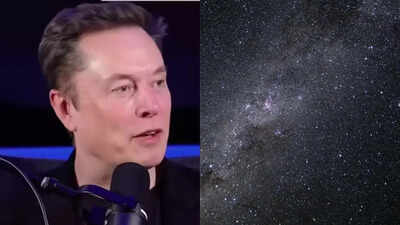
Artemis II is one of the most popular missions due to both technical progress and the pictures captured while the ship flew through space. One of the photos that attracted a lot of attention is the picture of the Milky Way taken during the lunar flyby. NASA posted the image and subsequently shared by Elon Musk, with his comment about humans inhabiting space in the future. This mission contributes to the overall process of testing spacecraft and astronauts operating far from Earth.This mission is conducted using the Orion spacecraft and involves a manned circumnavigation of the Moon followed by landing back on Earth. The photos taken during the flight can be used as another source of information, complementing the data collected during the mission.
Elon Musk reacts to the latest Artemis II Milky Way image released
Elon Musk’s reaction to the Artemis II Milky Way image was brief. He reshared the post and wrote, “One day, we will be out there.” The statement itself is not new in tone for Musk. He has often spoken about long-term human presence beyond Earth. Still, in this context, it aligns closely with the ongoing goals of private and public space programs.Artemis II is currently viewed as a stepping stone rather than a destination mission. Musk’s comment reportedly echoes a broader sentiment shared across the space industry, where lunar missions are seen as preparation for deeper space travel.
Artemis II mission: First crewed lunar flyby in over 50 years
The Artemis II mission is considered to be the first crewed flight around the moon in more than five decades. The astronauts do not make any landing on the moon but spend their time testing various things related to the systems, performance of the spacecraft, and the crew themselves.The astronauts travelled in NASA’s Orion spacecraft as part of a mission involving a flyby of the moon followed by a trip back to Earth. Each step of the way helps build the level of certainty about the safety of future missions to land astronauts on the moon.
Milky Way image captured by NASA during Artemis II lunar flyby
The Milky Way image shared by NASA was taken after the crew completed their lunar flyby on April 7, 2026. At that point, the spacecraft had already passed the Moon and was heading back toward Earth.The astronauts reportedly turned their cameras outward into deep space. From that vantage point, the galaxy appeared as a dense, glowing band stretching across the darkness. Such views are not visible from Earth in the same clarity, mainly due to atmospheric interference and light pollution. The photograph highlights how space missions can produce scientific data alongside visually compelling imagery. It also demonstrates the capabilities of onboard imaging systems during crewed missions.


