
NEW DELHI: The Centre on Wednesday told the Supreme Court that landmark rulings decriminalising adultery and same-sex consensual relationships were based on a “subjective” interpretation of constitutional morality and should be considered “not a good law.”The submissions were made before a nine-judge Constitution bench led by Chief Justice of India Surya Kant during hearings on petitions related to religious freedoms, including the Sabarimala temple issue, news agency PTI reported..Appearing for the Centre, Solicitor General Tushar Mehta argued that “constitutional morality” is a vague concept and cannot serve as a standalone test for judicial review of laws. He said in a democracy, laws reflect the will of the majority, raising questions about how morality should be defined in that context.Referring to the 2018 judgments in the Joseph Shine case (which struck down the adultery law) and Navtej Singh Johar case (which decriminalised homosexuality), Mehta expressed concern over reliance on foreign legal writings and academic opinions in court rulings.He argued that elevating constitutional morality as a legal standard runs contrary to the principle of separation of powers and the system of checks and balances, and may conflict with Article 13 of the Constitution.The Centre has also urged the court to declare the reasoning in the Joseph Shine judgment as “not a good law,” while clarifying it is not challenging the striking down of Section 497 itself.The bench is currently examining key questions around the scope of religious freedom and the interpretation of morality under Articles 25 and 26 of the Constitution, in a batch of cases including those linked to the Sabarimala issue.About the AuthorTOI News DeskThe TOI News Desk comprises a dedicated and tireless team of journalists who operate around the clock to deliver the most current and comprehensive news and updates to the readers of The Times of India worldwide. With an unwavering commitment to excellence in journalism, our team is at the forefront of gathering, verifying, and presenting breaking news, in-depth analysis, and insightful reports on a wide range of topics. The TOI News Desk is your trusted source for staying informed and connected to the ever-evolving global landscape, ensuring that our readers are equipped with the latest developments that matter most.”Read MoreEnd of ArticleFollow Us On Social MediaVideosDRDO Chief Flags Risks Of Foreign Dependence, Calls For Full-Spectrum Defence Self-Reliance’I Cry When I Think Of Indians’: Iran Supreme Leader’s Rep Hails India After Ceasefire With US‘Hormuz Disruptions Could Hit Growth’: RBI Governor Malhotra Flags Oil, Inflation Risks After MPCJaishankar To Visit UAE, Signals India’s Strategic Push After US, Iran Strike Ceasefire In West AsiaIndia Welcomes US-Iran Peace Push But Warns Against Further Disruption In Hormuz Supply Chain RouteFour Killed in Fresh Manipur Violence After Months of Calm; Probe Handed to NIACeasefire No Guarantee: Indian Embassy In Tehran Issues Urgent Exit Advisory For Citizens In IranIndia-US Ties Gain Momentum As Sergio Gor Meets Donald Trump, Vikram Misri Begins Crucial VisitPakistan PM Shehbaz Sharif’s Draft Tweet On US-Iran Ceasefire Sparks Row Over Diplomatic CredibilityIndian Army Releases UAV And Loitering Munition Roadmap, Focus On Drone-Centric Warfare123PhotostoriesNearly 100 hospitalised after suspected food poisoning: Food storage mistakes that turn dangerous in summerTop 8 Indian real estate hotspots for NRI investors right nowFrom ‘Ramayana’, ‘Cocktail 2’ to ‘Toxic’: A complete look at 2026’s biggest upcoming movies5 quiet laws of social power that make you instantly more respectedAs Ranbir Kapoor takes on dual roles in ‘Ramayana’, a look at Bollywood’s finest double role performancesMumbai Metro crosses 100km, overtakes Bengaluru to become India’s second-largest network after Delhi-NCRInside Ruturaj Gaikwad’s ₹8 crore Pune residence that defines modern luxuryWhat is your power word for the week; based on your birth numberFrom nutrition to toxicity: Why overdosing on vitamin-rich superfoods can harm your eyes, and what expert recommends insteadMumbai’s first driverless pod taxi: 8.85-km network with 22 stations to ease congestion in BKC123Hot PicksShreyas Iyer SisterUpdated IPL Points TablePurple cap winnerOrange cap winnerIPL Points TablePublic holidays April 2026Bank Holidays AprilTop TrendingTaylor Swift and Travis Kelce RelationshipIPL 2026Donald TrumpB V NagarathnaRomarioMHT CET Admit cardBengal PollIPL Points TableSchool Holidays in AprilKarnataka 2nd PUC Exam Result Date

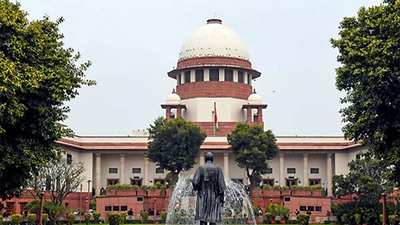
NEW DELHI: The Centre on Wednesday told the Supreme Court that landmark rulings decriminalising adultery and same-sex consensual relationships were based on a “subjective” interpretation of constitutional morality and should be considered “not a good law.“The submissions were made before a nine-judge Constitution bench led by Chief Justice of India Surya Kant during hearings on petitions related to religious freedoms, including the Sabarimala temple issue, news agency PTI reported..Appearing for the Centre, Solicitor General Tushar Mehta argued that “constitutional morality” is a vague concept and cannot serve as a standalone test for judicial review of laws. He said in a democracy, laws reflect the will of the majority, raising questions about how morality should be defined in that context.Referring to the 2018 judgments in the Joseph Shine case (which struck down the adultery law) and Navtej Singh Johar case (which decriminalised homosexuality), Mehta expressed concern over reliance on foreign legal writings and academic opinions in court rulings.He argued that elevating constitutional morality as a legal standard runs contrary to the principle of separation of powers and the system of checks and balances, and may conflict with Article 13 of the Constitution.The Centre has also urged the court to declare the reasoning in the Joseph Shine judgment as “not a good law,” while clarifying it is not challenging the striking down of Section 497 itself.The bench is currently examining key questions around the scope of religious freedom and the interpretation of morality under Articles 25 and 26 of the Constitution, in a batch of cases including those linked to the Sabarimala issue.


