
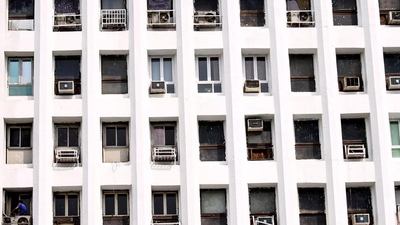
ANI file photo NEW DELHI: India’s room air-conditioner market is heading into the summer season under clear price pressure, even as companies remain bullish on long-term growth. Manufacturers including Blue Star have indicated further price hikes, driven by rising commodity costs, tighter energy-efficiency labelling norms that came into effect in Jan 2026 and current global headwinds. “The increase in commodity prices has been unprecedented,” said B Thiagarajan, managing director of the company.Industry executives estimate that higher input costs have added roughly 8-9% to material expenses, while the shift to more energy-efficient models is pushing prices up by another 5-8%. Together, this has translated into a 13% increase in AC prices, said Thiagarajan. However, a GST reduction has softened the blow, with consumers likely to see an effective rise of about 5% compared to last year. Companies have already passed on part of the increase, with more expected in phases. “A large part of the increase is already behind us. The balance will be taken as the season progresses,” Thiagarajan said, indicating a staggered pricing strategy. Other players, including Godrej Enterprises Group, have also raised prices. “Despite a challenging year for the AC industry, which witnessed a decline in overall sales, Godrej ACs achieved significant growth,” said Kamal Nandi, business head, appliances business at the company. Godrej has increased AC prices by nearly 10%. At Hisense India, CEO Pankaj Rana said the recent price hikes are a function of sustained input cost pressures. “The recent increase in AC prices is primarily driven by a sharp rise in input costs, including raw materials, logistics, and broader supply chain disruptions,” he said.Rana noted that companies have ensured adequate inventory and strong on-ground presence to meet summer demand. “While demand remains robust, any further price revisions will depend on how input costs evolve, as well as the competitive landscape, with potential increases in the range of 7-10%, depending on demand trends and competitive responses,” he said. Manufacturers are walking a tightrope between protecting margins and sustaining demand during peak summer months. Apart from commodity inflation, elevated copper prices, a weaker rupee, and higher freight and component costs continue to weigh on profitability. Demand, meanwhile, has been volatile due to erratic weather and unseasonal rains, which impacted peak-season sales last year. Thiagarajan said 2025 turned out to be a weak summer, with industry volumes likely declining 5-7.5% compared to FY25. The outlook, however, remains strong. The domestic AC market, estimated at 14 million units, is expected to nearly double to about 30 million units by FY30, driven by rising incomes, heat, and deeper penetration in smaller towns.About the AuthorAabhas SharmaAabhaasEnd of ArticleFollow Us On Social MediaVideosManipur Erupts Again After Deadly Blast Kills 2 Children; Curfew Imposed, Internet Shutdown’Avoid Military Areas, Stay Indoors’: India Issues Advisory For Indians In Iran As Tensions RiseManipur Erupts Again: Curfew, Internet Shutdown As Violence Returns Over Killing Of Two ChildrenTejas Back In Air After Setbacks, But Reliability And Delays Raise Fresh Questions’Target Of Akhand Bharat’: Pakistan Senator Sounds Alarm Over Growing India-UAE Ties’At The Behest Of Mamata’: BJP MP Nishikant Dubey’s Shocking Claim On Pakistan’s Kolkata ThreatIndia Seeks US Waiver On Chabahar Amid Conflict; Iran Envoy Hints At Key Port Revival After WarBJP Calls Kharge’s ‘Snake’ Remark Dangerous, Alleges Communal ProvocationAssam Passport Row Turns Personal: Himanta Sarma Takes ‘Peda’ Jibe At Pawan Khera, Congress Responds’Pakistan Will Be Divided Into…’: Rajnath Singh’s Strong Response To Khawaja Asif’s Kolkata Threat123PhotostoriesHow to make protein-rich Egg Poha for breakfast at home8 animals that shed their skin in the most surprising ways5 cheapest Indian states to buy gold in 2026You have heard of ‘good’ and ‘bad’ cholesterol: But what if that’s not the full story and you’re reading it wrong?10 short baby girl names inspired by beautiful flowersFrom Divyanka Tripathi to Karishma Tanna confirming their pregnancies to Surbhi Jyoti flaunting her baby bump; TV actresses who are all set to embrace motherhoodWhy this is the only Indian dish among the 50 Best Bean Dishes in the World5 fun and unusual vacation ideas for the summer holidays in IndiaStep inside Kapil Dev’s Delhi residence that defines understated luxurySimple remedies to attract wealth based on your number123Hot PicksShreyas Iyer SisterUpdated IPL Points TablePurple cap winnerOrange cap winnerIPL Points TablePublic holidays April 2026Bank Holidays AprilTop TrendingTaylor Swift and Travis Kelce RelationshipIShowSpeedStephen CurrySheldon KeefeUS stocks todayIran AdvisoryCarlos AlcarazIPL Points TableSchool Holidays in AprilKarnataka 2nd PUC Exam Result Date

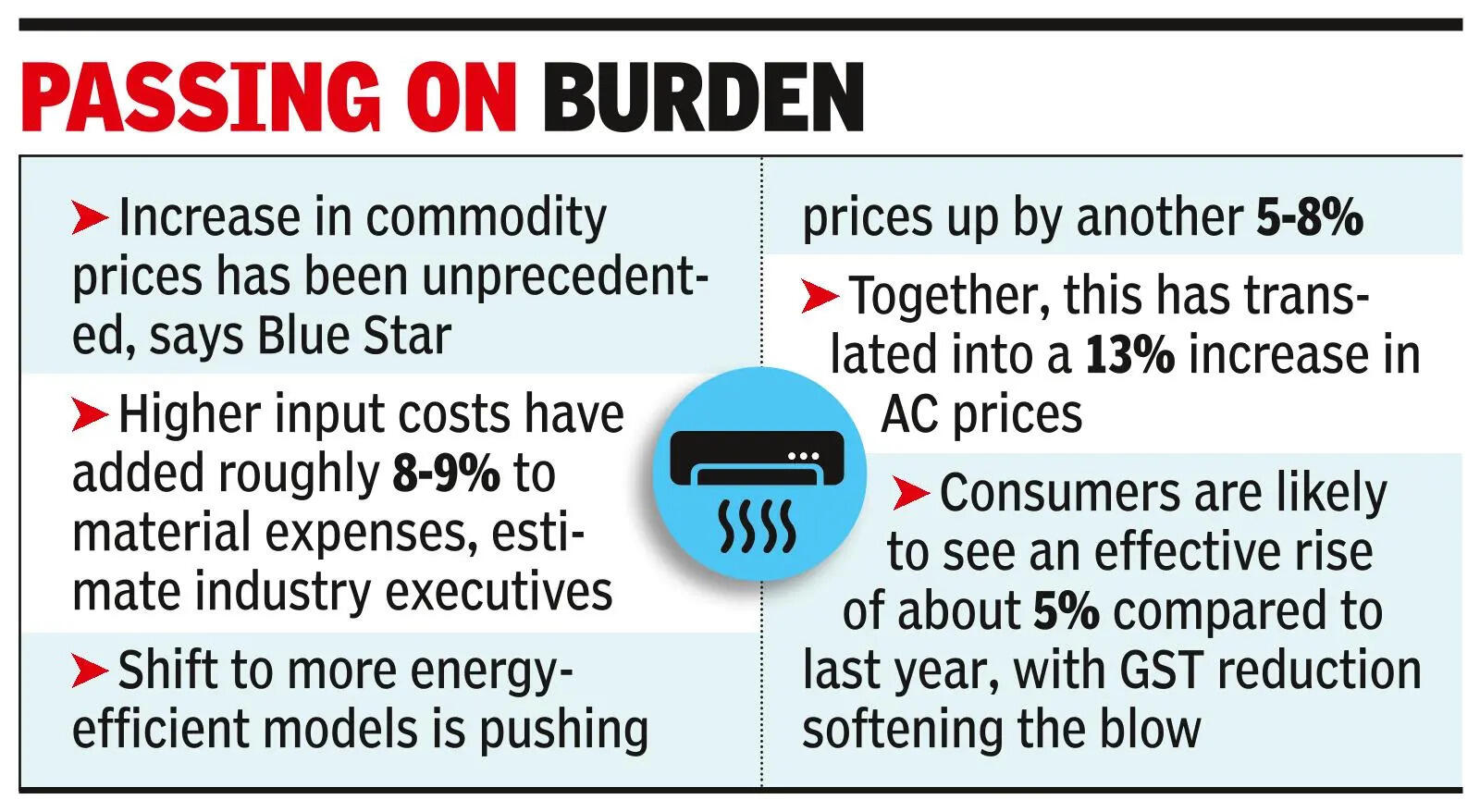
NEW DELHI: India’s room air-conditioner market is heading into the summer season under clear price pressure, even as companies remain bullish on long-term growth. Manufacturers including Blue Star have indicated further price hikes, driven by rising commodity costs, tighter energy-efficiency labelling norms that came into effect in Jan 2026 and current global headwinds. “The increase in commodity prices has been unprecedented,” said B Thiagarajan, managing director of the company.Industry executives estimate that higher input costs have added roughly 8-9% to material expenses, while the shift to more energy-efficient models is pushing prices up by another 5-8%. Together, this has translated into a 13% increase in AC prices, said Thiagarajan. However, a GST reduction has softened the blow, with consumers likely to see an effective rise of about 5% compared to last year.
Companies have already passed on part of the increase, with more expected in phases. “A large part of the increase is already behind us. The balance will be taken as the season progresses,” Thiagarajan said, indicating a staggered pricing strategy. Other players, including Godrej Enterprises Group, have also raised prices. “Despite a challenging year for the AC industry, which witnessed a decline in overall sales, Godrej ACs achieved significant growth,” said Kamal Nandi, business head, appliances business at the company. Godrej has increased AC prices by nearly 10%. At Hisense India, CEO Pankaj Rana said the recent price hikes are a function of sustained input cost pressures. “The recent increase in AC prices is primarily driven by a sharp rise in input costs, including raw materials, logistics, and broader supply chain disruptions,” he said.Rana noted that companies have ensured adequate inventory and strong on-ground presence to meet summer demand. “While demand remains robust, any further price revisions will depend on how input costs evolve, as well as the competitive landscape, with potential increases in the range of 7-10%, depending on demand trends and competitive responses,” he said. Manufacturers are walking a tightrope between protecting margins and sustaining demand during peak summer months. Apart from commodity inflation, elevated copper prices, a weaker rupee, and higher freight and component costs continue to weigh on profitability. Demand, meanwhile, has been volatile due to erratic weather and unseasonal rains, which impacted peak-season sales last year. Thiagarajan said 2025 turned out to be a weak summer, with industry volumes likely declining 5-7.5% compared to FY25. The outlook, however, remains strong. The domestic AC market, estimated at 14 million units, is expected to nearly double to about 30 million units by FY30, driven by rising incomes, heat, and deeper penetration in smaller towns.


